
Jones Chevrolet - Which three-row SUV offers real hands-free driving for I-95 and US-521 weekends around Manning, SC?
What most shoppers really mean by “hands-free”
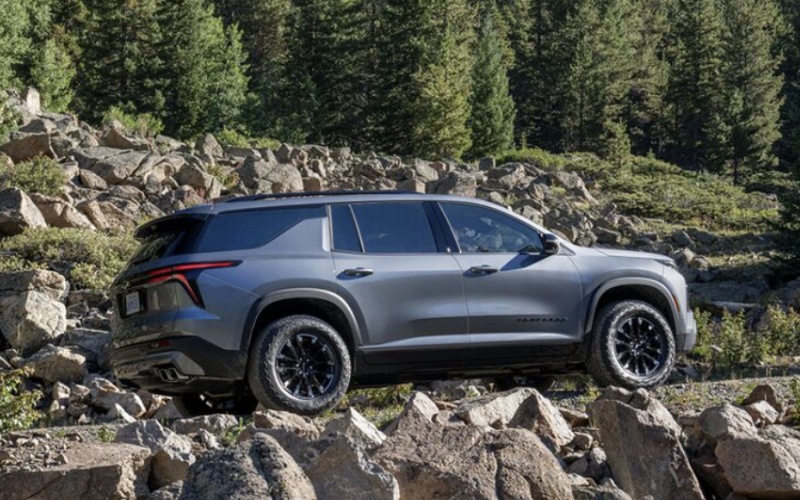
When families ask about hands-free driving, they’re usually picturing more than lane centering or adaptive cruise control. They want a system that truly lets them remove their hands on compatible roads, while the vehicle handles steering, acceleration, and braking within its lane. In today’s three-row class, that’s the key difference between the 2026 Chevrolet Traverse and the 2026 Honda Pilot. The Traverse offers available Super Cruise®, a hands-free driver assistance technology designed for hundreds of thousands of miles of compatible roads across the U.S. and Canada. The Pilot, while equipped with Honda Sensing® features like Adaptive Cruise Control with Low-Speed Follow and the Lane Keeping Assist System, does not provide a true hands-free system.
For Manning-area trips—think I-95 stretches to visit family, US-521 runs for weekend ball tournaments, or relaxed drives toward Lake Marion—hands-free capability changes the feel of the drive. On compatible roads, Super Cruise® can reduce the constant micro-corrections that add up to fatigue, making it easier to arrive with more focus and energy. That’s not a knock on Honda Sensing®, which remains a robust suite of alerts and assistance; it’s simply a recognition that hands-free is a distinct level of support that many shoppers are specifically seeking.
How Super Cruise® works on the Traverse
At its core, Super Cruise® blends real-time sensors in the SUV with high-precision map data and driver attention monitoring. When the system confirms you’re on a compatible, mapped highway and your attention is up, Super Cruise® can steer, accelerate, and brake within its lane—hands-free. The visual indicators on the steering wheel rim keep you informed about system status, and lane changes can be prompted by the driver using the turn signal where supported. Because Super Cruise® is designed for long-haul consistency, it excels on the kind of multi-lane interstates and divided highways that connect communities around Manning, SC.
Contrast that with the Pilot’s Adaptive Cruise Control with Low-Speed Follow and the Lane Keeping Assist System. These assist with speed and provide steering inputs, but your hands stay on the wheel and full engagement is still required. For some families, that’s perfectly fine. For others—those who spend hours on I-95 or US-301—shifting some of the steady-state workload to a hands-free system is exactly the relief they’re looking for.
Tech, visibility, and the daily grind
Driver-assistance is only part of the story. The Traverse makes living with a big SUV simpler through a standard 17.7-inch diagonal color touch-screen and 11-inch Driver Information Center. Larger native tiles and crisp camera views help during school pickups, tight lots near Rec Center fields, and quick-loop errands downtown. Available HD Surround Vision layers in a high-resolution 360-degree perspective for threading curbsides or easing into spots next to taller vehicles.
The Pilot counters with Google built-in on many trims, a 12.3-inch color touch-screen, and a Multiview Camera System on TrailSport and above. It’s a quality infotainment approach. Still, if you value screen real estate for maps, split-screen camera views, and media, the Traverse’s standard display scale reduces hunting and pecking—particularly welcome when you’re juggling after-school activities and weekend gear across Manning neighborhoods and nearby small towns.
Space and reconfiguration: why seconds matter
Real life is messy—and that’s where the Traverse’s available power-folding second- and third-row seating (RS and High Country) pays off. With the press of a button, you can move from max people to max cargo in moments. That fluidity helps when the soccer coach just handed you two extra bags or a last-minute pickup from the hardware store means laying the third row flat before you even shift into Park. The Pilot offers a stowable second-row center seat on several trims, plus one-touch second-row access. It’s handy, but it isn’t a push-button conversion of both back rows.
Both SUVs accommodate families well, with flexible seating and helpful storage solutions. The practical question for many households is simply: do you want the quickest path from “bring everyone” to “bring everything”? If yes, Traverse RS and High Country provide that extra layer of speed and simplicity.
Capability for weekend plans
Tow ratings are comparable in raw numbers, but how you get there is different. The 2026 Traverse includes a standard 5,000-pound towing capacity with included trailering equipment, so you’re ready for utility jobs or a small boat without fussing with accessory installs. Honda rates the Pilot for up to 5,000 pounds when properly equipped, and several trims require additional hardware. If your plans involve a trailer more weekends than not, that standardization in Traverse trims reduces setup time and uncertainty.
For traction, the Traverse Z71’s Advanced Twin-Clutch AWD system can precisely apportion torque side-to-side, enhancing corner exit grip on rain-glossed pavement or sandy shoulders near Lake Marion. The Pilot’s i-VTM4® AWD likewise uses a dual-clutch rear drive unit to improve stability and traction and offers up to seven drive modes on certain trims. Both are capable approaches; the difference comes from how the Traverse packages complementary chassis tuning—like frequency-based suspension dampers on Z71—to keep the ride buttoned-down yet comfortable for long stretches.
Feature highlights at a glance
- Hands-free advantage: Traverse offers available Super Cruise®; Pilot provides Honda Sensing® but no hands-free system.
- Screen size and clarity: Traverse includes a standard 17.7-inch touch-screen; Pilot’s touch-screen is 12.3 inches on many trims.
- Quick cabin re-set: Traverse RS and High Country add power-folding second- and third-row seating; Pilot’s row conversions are manual.
- Parking confidence: Both offer a 360-degree camera system; Traverse’s HD Surround Vision provides crisp detail that helps in tight lots.
- Towing readiness: Traverse includes standard 5,000-pound towing with trailering equipment; Pilot requires proper equipment and trims.
Frequently Asked Questions:
Is Super Cruise® difficult to use on regular South Carolina highways?
No. When you’re on a compatible, mapped road, the system clearly indicates availability. Activate it, keep your attention up, and the Traverse handles steering, acceleration, and braking within its lane—hands-free.
Does the Honda Pilot have anything like Super Cruise®?
Pilot features Honda Sensing® with Adaptive Cruise Control with Low-Speed Follow and the Lane Keeping Assist System. These assist the driver, but they are not hands-free systems.
What about navigating crowded parking areas in Manning?
Both SUVs can be equipped with a 360-degree camera system. The Traverse’s available HD Surround Vision delivers high-resolution views that make lining up curbs and spotting low obstacles easier.
Is the Traverse’s big screen helpful, or just for show?
The standard 17.7-inch display reduces menu layers and makes split-view maps and cameras easier to read at a glance, especially when you’re handling quick stops around Manning or hopping onto I-95.
Who can help me compare trims and features face-to-face?
The team at Jones Chevrolet—serving Lugoff, Manning, and Florence—can walk you through feature differences, demo driver-assistance tech, and set up back-to-back test drives so you can feel the contrasts for yourself.
Bottom line: If your main question is whether any family-sized SUV offers true hands-free driving, the Traverse is your answer. Super Cruise® delivers precisely that capability on compatible roads, while the rest of the cabin tech, towing readiness, and quick seat reconfiguration keep your busy calendar moving. The Pilot remains a solid, safe, and refined option, but if hands-free is the deciding factor for your drives around Manning, SC, the Traverse leads.