
Jones Chevrolet - Which three-row SUV has the most advanced hands-free capability in West Columbia, SC?
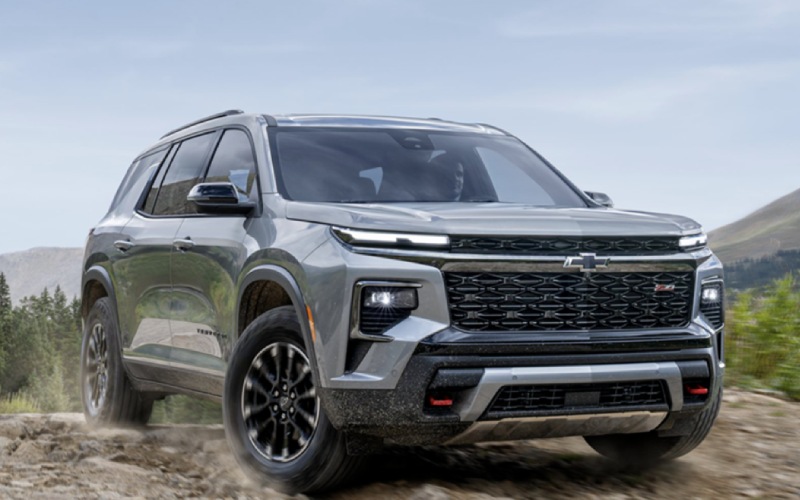
Families comparing three-row SUVs often ask a simple question that reveals a lot about everyday ease: which model gives the most confidence with hands-free driving and lane-centering on busy interstates and multi-lane routes? In this head-to-head, the Chevrolet Traverse offers available Super Cruise®, a hands-free driver assistance technology that functions on more than 585,000 miles of compatible roads in the U.S. and Canada, while the Honda Pilot relies on the excellent Honda Sensing® suite for active support but does not enable hands-free operation. If your commute includes frequent I-26 or I-20 segments, the difference in how you relax your grip and reduce micro-corrections over time can be meaningful.
Beyond hands-free capability, the on-screen experience matters. Traverse standardizes a 17.7-inch diagonal touch-screen and an 11-inch diagonal Driver Information Center, delivering large, legible tiles and swift navigation. Pilot’s clear 12.3-inch color touch-screen on upper trims does the job well, and Honda Sensing brings Collision Mitigation Braking System™, Road Departure Mitigation System, Adaptive Cruise Control with Low-Speed Follow, Lane Keeping Assist System, and Traffic Sign Recognition. Both SUVs integrate Google built-in, so voice navigation, intelligent routing, and everyday apps are covered. Where Traverse pulls ahead is the cumulative effect—bigger screen, crisper layout, optional hands-free driving, and available HD Surround Vision for parking lots and crowded school pickup lines.
Consider the underlying traction story as well. Traverse Z71 brings an off-road suspension, Terrain Mode, Hill Descent Control, and an advanced twin-clutch AWD system that precisely moves torque across the rear axle. Pilot TrailSport counters with all-terrain tires, steel skid plates, Hill Descent Control, a 7-Mode Drive System, and i-VTM4® AWD. Both SUVs handle rain-slick lanes, gravel detours, and winter weather with confidence. But when crossing long bridges or weaving through traffic near West Columbia, SC, the steadiness of lane-centering plus the hands-free potential of Super Cruise® can dramatically reduce fatigue, especially on longer weekend drives.
To help you compare at a glance, here are core points that often decide it for families:
- Hands-free capability: Traverse offers available Super Cruise® for compatible roads; Pilot does not offer a hands-free system.
- Primary displays: Traverse uses a standard 17.7-inch touch-screen and 11-inch Driver Information Center; Pilot tops out with a 12.3-inch touch-screen plus a 10.2-inch instrument cluster.
- Parking confidence: Traverse offers available HD Surround Vision with high-resolution views; Pilot offers a Multiview camera system with TrailWatch™ on select trims.
- Second-row access: Traverse Smart Slide second-row seats streamline third-row entry; Pilot uses one-touch second-row seats and a stowable center seat on select trims.
- Long-haul ease: Super Cruise® plus Google built-in in Traverse provides a relaxed, connected drive on extended highway stretches.
Frequently Asked Questions:
Is Super Cruise® truly hands-free for everyday commuting?
When engaged on compatible roads and the system confirms driver attention, Super Cruise® enables hands-free driving, handling steering and speed adjustments within system limits. It is designed for controlled highway use and will prompt the driver when attention is needed.
Does Pilot offer any comparable hands-free feature?
Pilot includes Honda Sensing® with lane-centering and adaptive cruise functions that reduce workload, but it does not provide hands-free operation. The driver must keep hands on the wheel at all times.
Which SUV provides clearer camera views for tight parking?
Traverse offers available HD Surround Vision with high-resolution imagery around the vehicle. Pilot provides a Multiview camera system with TrailWatch™ on upper trims, which is helpful off-road and around curbs, though it is not branded as an HD surround system.
How do both models handle apps and navigation?
Both SUVs offer Google built-in, enabling native maps, voice assistance, and app support. Families used to smartphone navigation will find the transition seamless in either model.
For drivers weighing capability beyond hands-free tech, power and towing confidence also matter. Traverse’s turbocharged character provides responsive, midrange-rich torque that helps with on-ramps and merges when fully loaded. Pilot’s V-6 is smooth and familiar, with easygoing power delivery. Both can be set up for 5,000 pounds of towing when properly equipped, so weekend plans remain wide open. Ultimately, shoppers who prize the latest driver assistance, a larger standard screen, and an intuitive cabin layout tend to prefer Traverse, while those satisfied with conventional assistance and a familiar V-6 gravitate toward Pilot. Jones Chevrolet is serving Columbia, West Columbia, and Lexington with guided test-drives that demonstrate these systems in real-world conditions so families can choose confidently. Schedule a visit to see how the hands-free advantage, display clarity, and parking tech work together on your routes—and decide which fit feels right for your daily rhythm.
Ready to compare on your terms? Our team will map out a route that mirrors your commute, highlight driver assistance on the highway, and walk through camera views in a crowded lot. One transparent side-by-side is often all it takes to see the difference where it counts.